Business Transaction Intelligence
Designed natural language and cognitive UI for complex data, expanding market access and usability for non-technical users. Led cross‑functional teams through 0→1 and 1→N initiatives, from exploratory research and concept sprints to shipping responsive, multi‑device solutions.
Role
Design Lead
Employer
IBM
Platforms
Web
Areas
Research, Strategy, Design
Year
2016

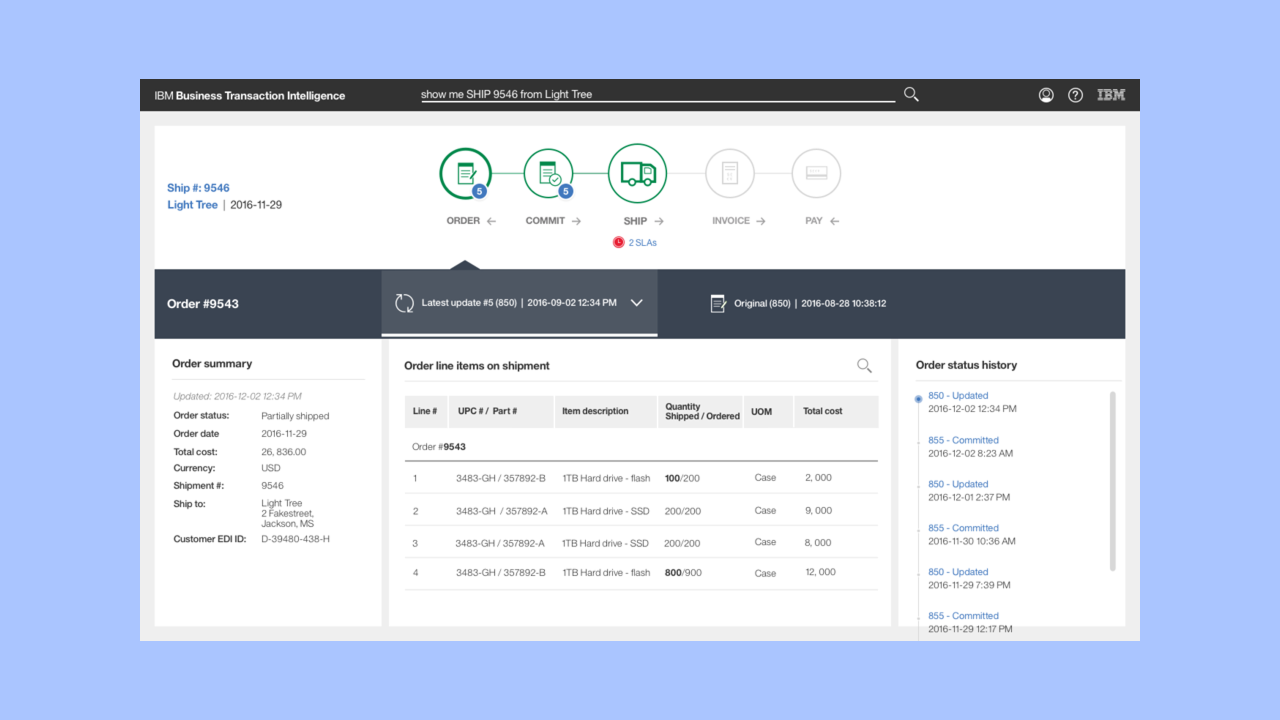
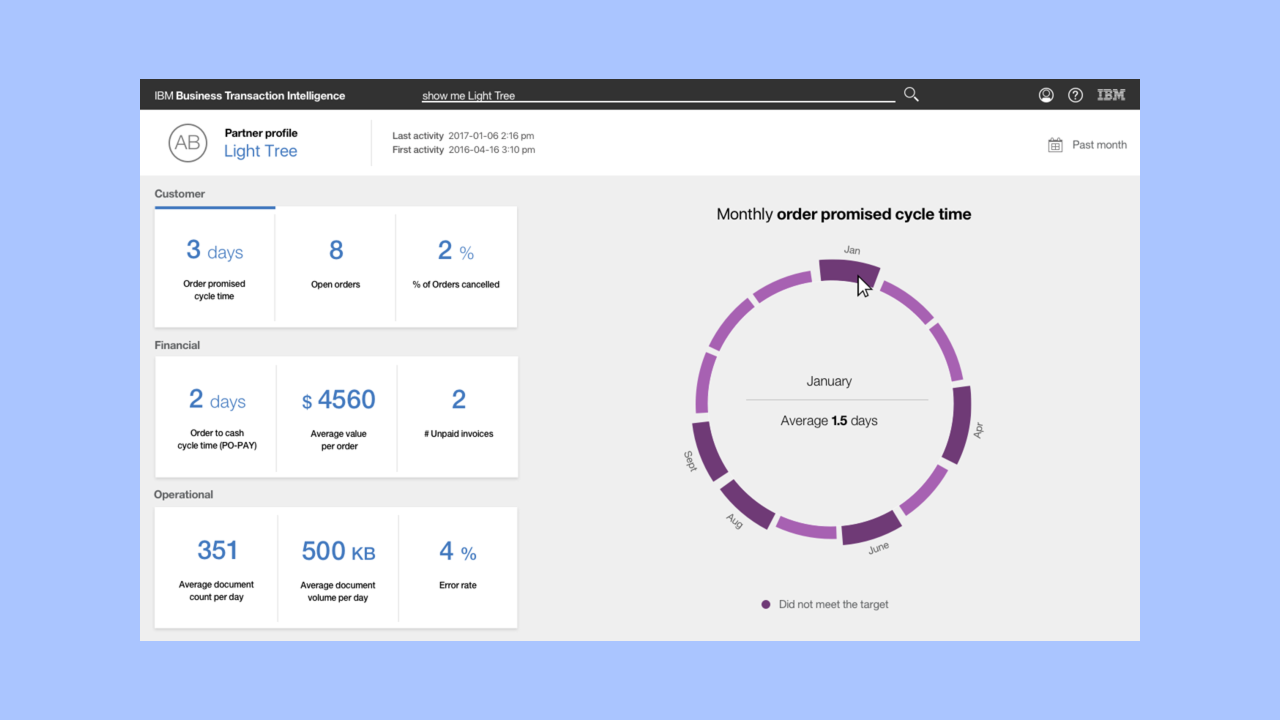
Business Transaction Intelligence (BTI) transforms how organizations view their supply chain data. Instead of combing through raw, technical information, teams gain instant clarity into every stage of an order, shipment, or invoice—all through an intuitive interface. BTI empowers anyone, regardless of technical background, to answer critical questions like “Where’s my order?” in seconds, eliminating the bottlenecks that once required specialized EDI expertise.

Business Goals
1) Drive $1M in revenue within the first year by delivering a solution that provides immediate, tangible value to customers.
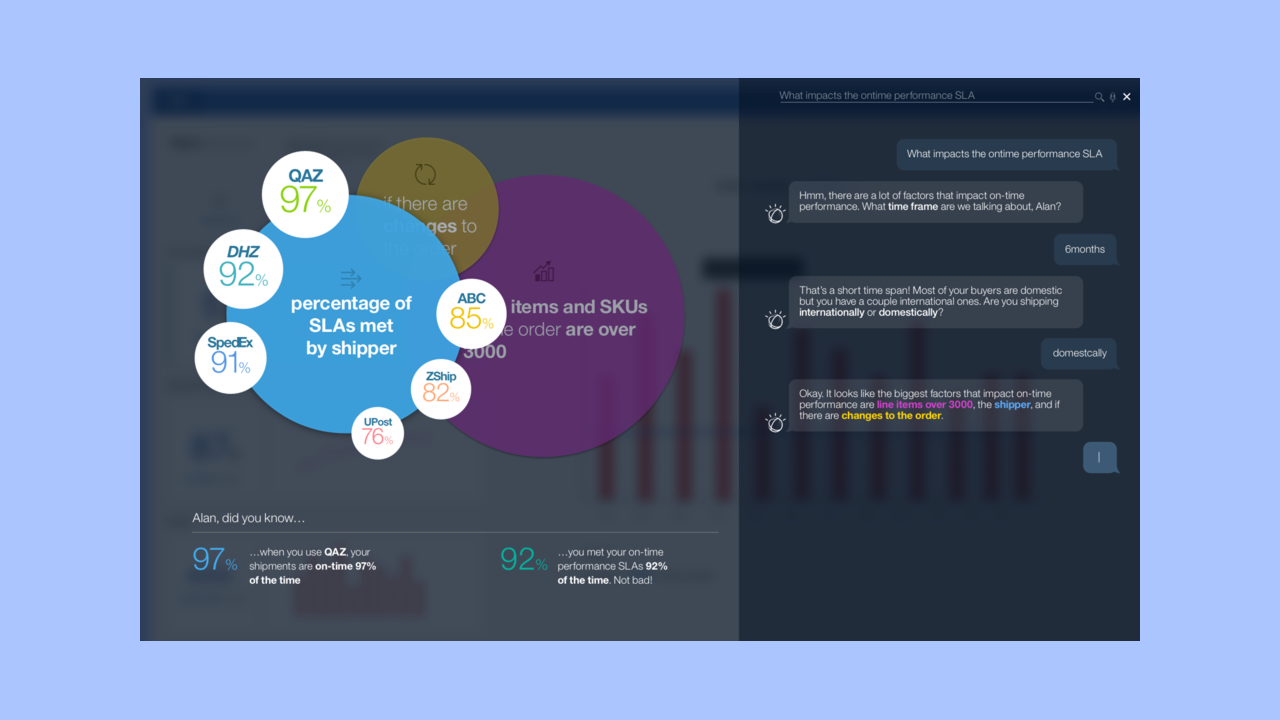
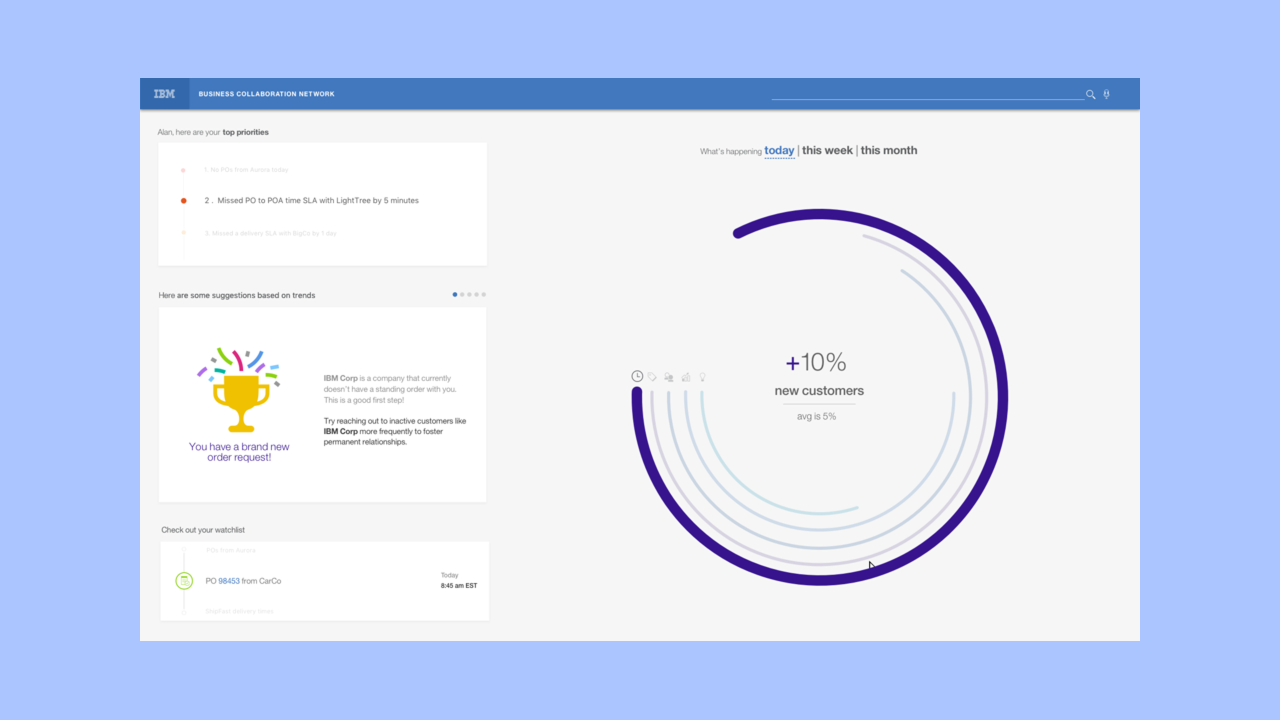
2) Build a modern, cloud based platform powered by Watson AI to surface real time insights and predictions.
3) Design an intuitive experience that enables non‑technical users to quickly answer a critical question: “What’s the status of my order?”
The Challenge
1) This was a high‑risk initiative, introducing a completely new offering to the market.
2) The team faced a steep learning curve as we worked to understand and apply Watson’s capabilities effectively.
3) We were the first product team to integrate with the newest Watson APIs, requiring close collaboration with engineering and research teams.
4) As early adopters of IBM’s Design Thinking framework, we had to define and refine new ways of working while delivering on outcomes.
5) Tight timelines required rapid alignment, accelerated learning, and iterative delivery.
The Outcome
Within the first quarter of launch, the solution generated $1.4 million in revenue. Customer feedback was exceptionally positive, one client reported needing only 25% of their EDI technical team to manage the same workload, freeing the rest to focus on higher value, strategic initiatives. The results demonstrated clear ROI through improved efficiency, satisfaction, and productivity.
Research & Ideation
I led the discovery process using a comprehensive mix of methods that included, task flow analysis, needs statements, “chase wild ducks” exercises, divide-the-dollar prioritization, card sorting, and qualitative interviews. Our research revealed that many organizations had entire teams dedicated to answering a single recurring question: “Where is my order?” These teams spent hours combing through EDI documents and faced a high turnover rate, driving significant training costs.
By deeply understanding how users sought these answers, we identified an opportunity to simplify dramatically. I guided the team to design around our primary persona, the non‑technical user, ensuring every decision stayed focused on clarity, efficiency, and the user’s real-world workflow.
Design strategy
Keep it simple — We focused on simplicity, the experience needed to be effortless, delivering quick answers without unnecessary complexity. The design was intentionally geared toward non‑technical users, making it easy for anyone to find the information they needed in seconds.
Emphasize Search — We emphasized the power of search, recognizing that users simply want answers to their questions. Our goal was to let them ask naturally, following their existing mental models, rather than forcing them to navigate complex menus or data structures.
Remove the clutter — More information doesn’t always mean more clarity. By revealing only what’s relevant at the right moment, we help users focus on what matters most and reach their answers faster.