Control Tower
Designed and launched NetSuite’s first AI‑driven solution for supply chain practitioners. Led the product from 0→1 concept to 1→N expansion, driving the design through exploratory research, concept sprints, and iterative validation to enable users to run intelligent “what‑if” scenarios with ease.
Role
Design Lead
Employer
Oracle Netsuite
Platforms
Web
Areas
Research, Strategy, Design
Year
2016

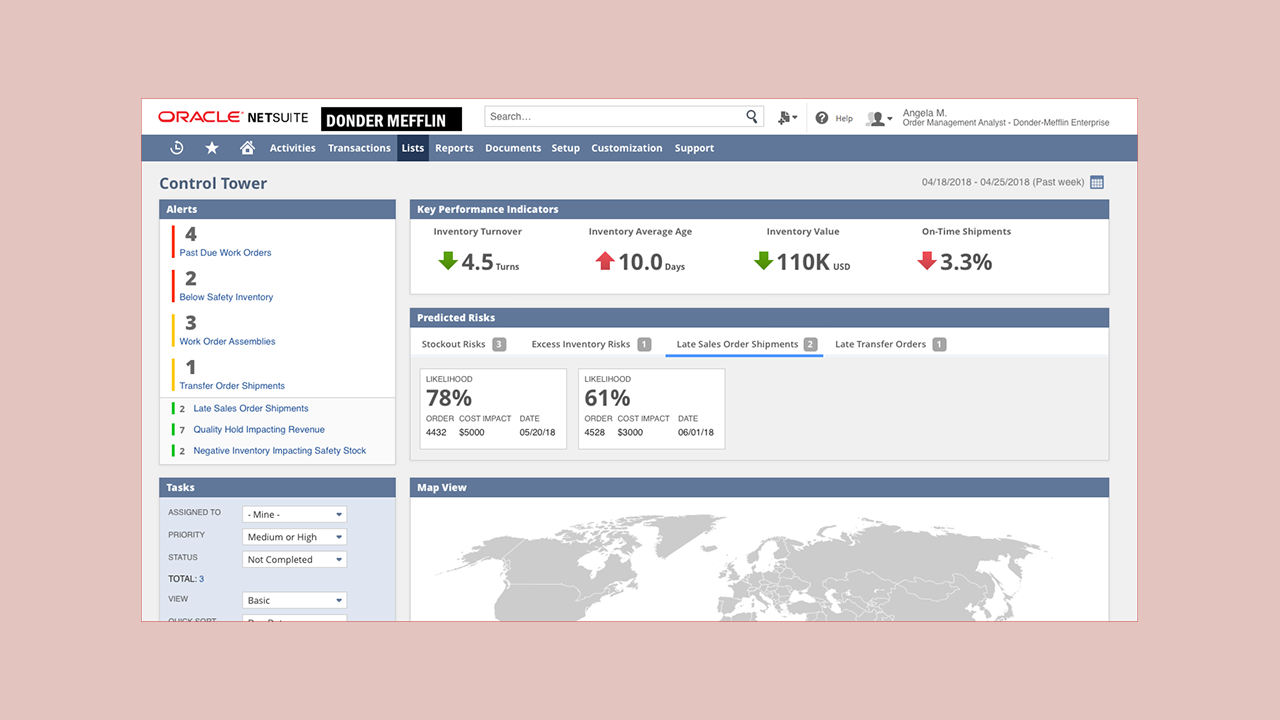
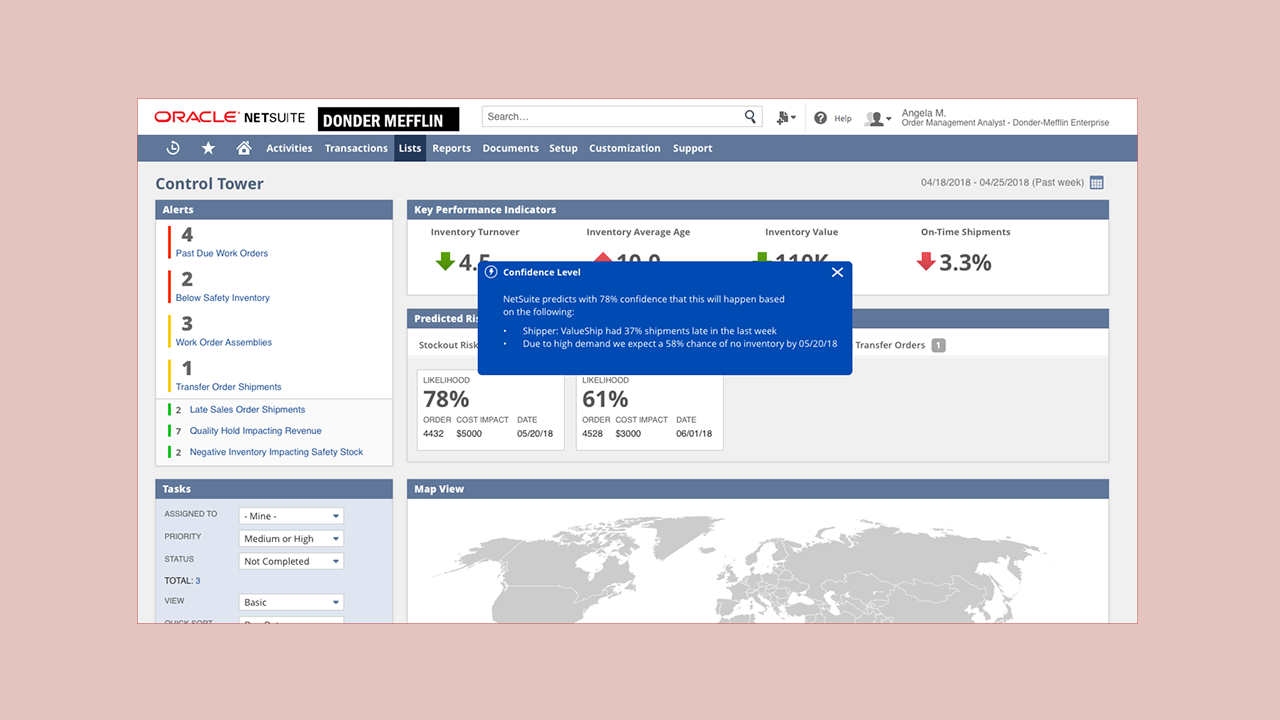
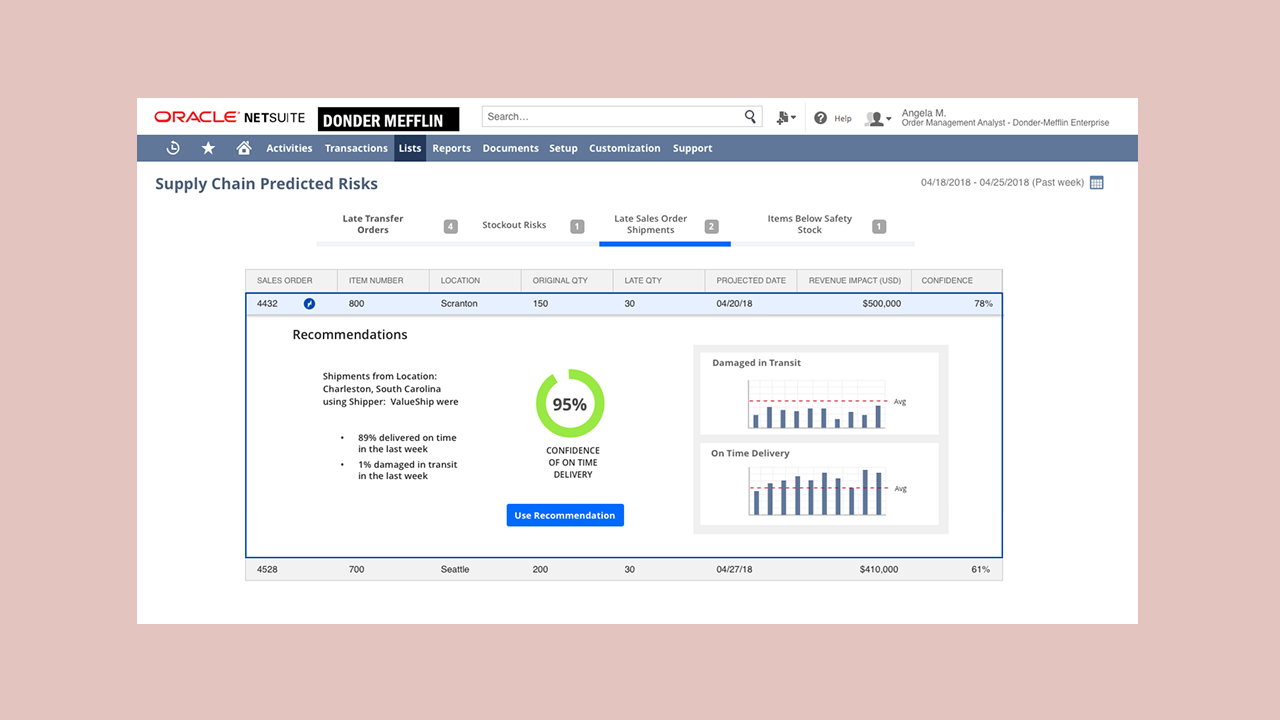
Control Tower provides supply chain teams with a real‑time view of operational health, enabling proactive management before issues escalate. The Predicted Risks feature uses AI to forecast potential delays, predicting whether purchase or transfer orders will arrive on time and if sales orders can be fulfilled as promised. Each prediction includes a confidence level and actionable recommendations, giving users the context they need to protect customer commitments.
With Projected Risk capabilities, users can dive deeper into order details to understand downstream impacts and explore “what‑if” scenarios. This empowers teams to test adjustments, assess outcomes, and act decisively based on system generated insights that help keep deliveries on track.

Business Goals
1) Empower supply chain practitioners with real time predictive insights to drive faster, more informed decisions.
2) Establish NetSuite’s first AI‑powered solution, setting the foundation for future intelligent capabilities across the platform.
3) Ensure accessibility and ease of use for all users, including small business owners, by designing an intuitive experience that requires no technical expertise.
The Challenge
1) This was a high risk initiative, introducing a completely new AI‑driven offering to the NetSuite ecosystem.
2) The team faced a steep learning curve, having never designed or implemented an AI solution before.
3) We were under a fixed, high‑visibility deadline to launch before SuiteWorld, where executives planned to showcase the product live on the main stage.
4) The solution had to be designed within existing framework and design system constraints, requiring creative problem solving to deliver innovation without breaking consistency.
The Outcome
Within the first year of launch, thousands of customers adopted the supply chain prediction capabilities. By designing personalized predictions paired with clear, actionable insights, we transformed what was once a complex analytical task into a natural part of users daily workflows, empowering teams to make smarter, faster decisions with confidence.
Research & Ideation
I led the discovery phase using a comprehensive mix of methods, including task flow analysis, needs statements, “what‑if” scenario exercises, and qualitative interviews. The research revealed a consistent pattern, organizations wanted clear visibility into potential delays and the confidence to know whether orders could be fulfilled on time.
By deeply understanding how users sought these answers, I identified an opportunity to significantly simplify their experience. I directed the design strategy around our primary persona, the small business owner, ensuring every decision prioritized clarity, efficiency, and alignment with real‑world workflows.
Design strategy
Keep it simple — As NetSuite’s first AI‑driven solution, simplicity was essential. We focused on creating a clear, approachable experience that introduced intelligence without overwhelming users.
Emphasize explainability — Transparency built trust. We ensured users understood not only what the system was showing but also why—pairing every prediction with clear, actionable insights.
keep the user in control — The system was designed to empower, not automate. Users maintained full control over decisions, with AI serving as a supportive guide rather than a replacement for human judgment.