Sales Order
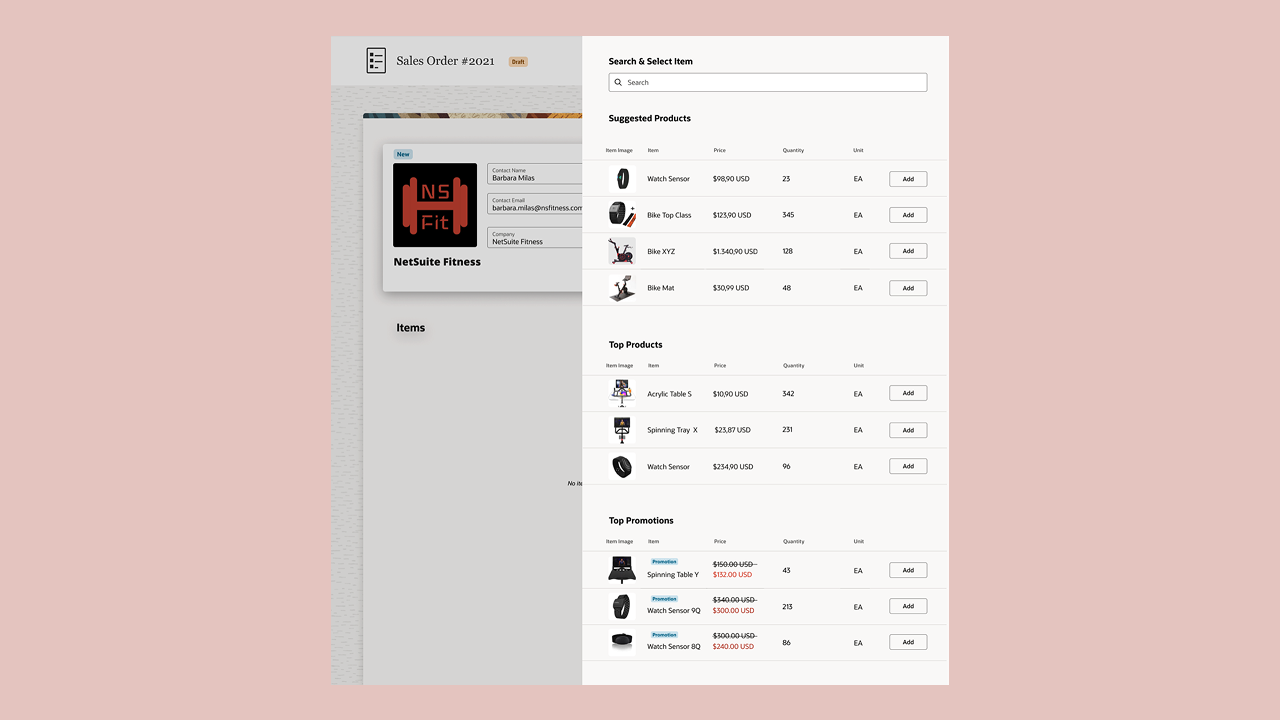
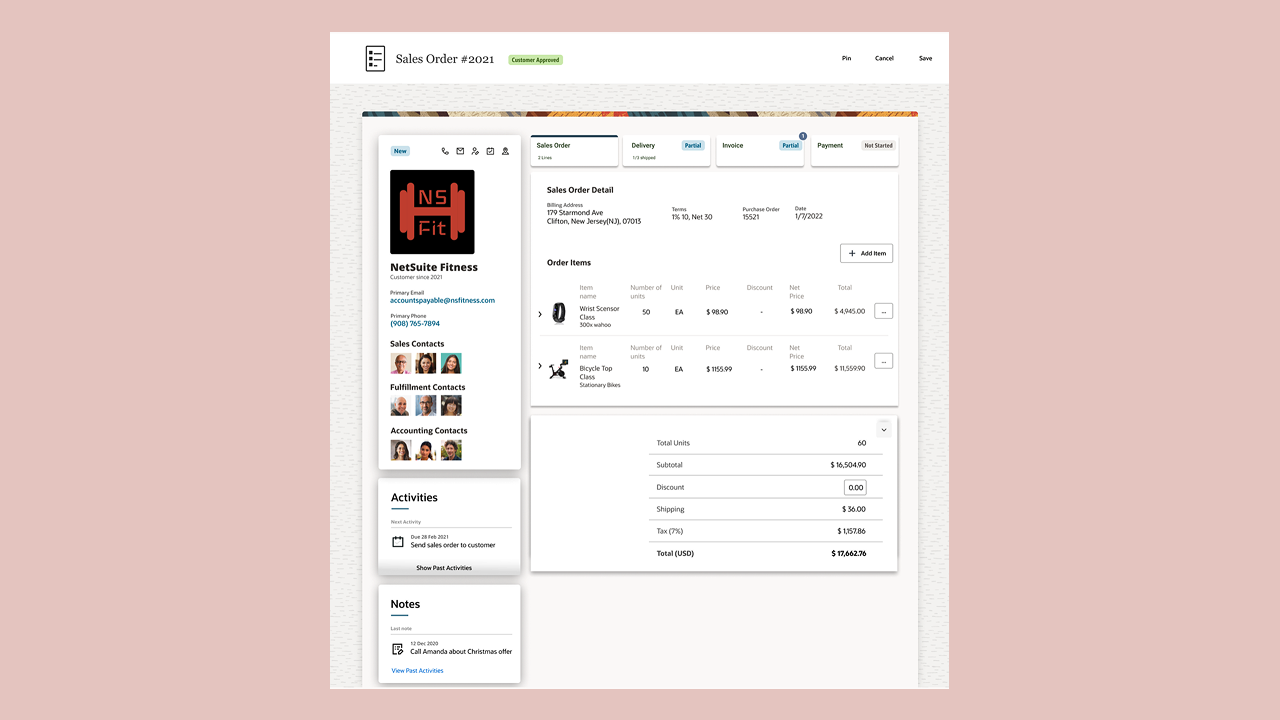
A sales order records a customer’s commitment to purchase products or services, acting as a central source of truth throughout the fulfillment process. For users, it delivers transparency and control—clearly showing what’s been ordered, what inventory is allocated, what’s shipped, and what’s still pending.
Role
Design Lead
Employer
Oracle
Platforms
Web
Areas
Research, Strategy, Design
Year
2021
Business Goals
1) Redesign the Sales Order experience using Oracle’s new Redwood design system.
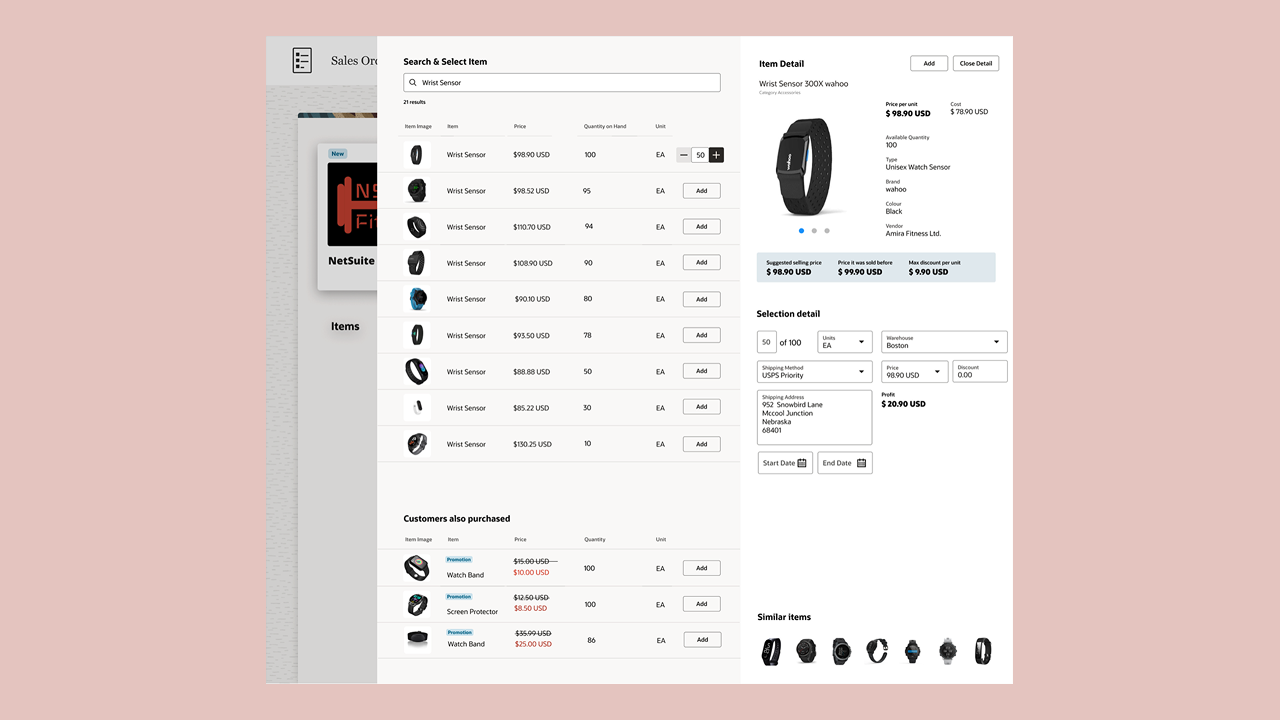
2) Make entering a sales order as simple as purchasing something on a B2C site.
3) Must still include the complexity of B2B (Subscriptions, reoccurring orders and open sales orders).
4) Use AI.
The Challenge
1) High risk as this was a different team working on this (not the current Sales Order team).
2) Work with Oracle’s ERP team, they have a vested interest in our designs as they wanted to use them.
3) We were the first product team using Redwood.
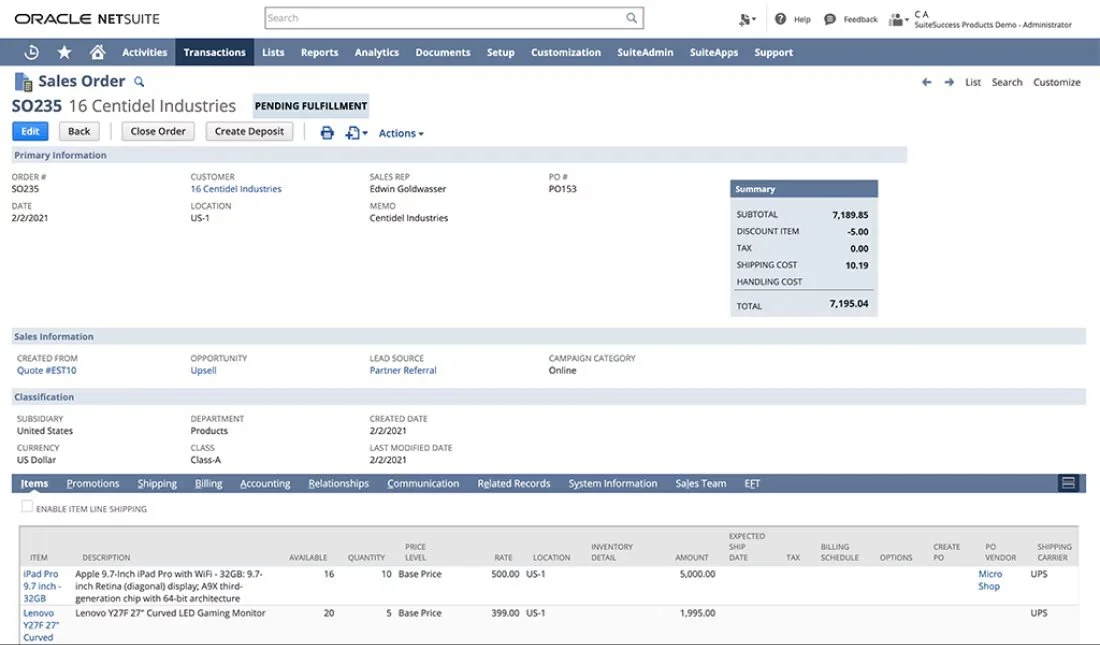
4) Customers were already use to the current paradigms.
5) The team was new to developing and designing AI solutions.
The Outcome
I guided the team in creating a consumer like experience within a complex B2B environment, balancing usability with enterprise level functionality. Through iterative testing, we learned that customers were highly engaged by personalized recommendations and related product suggestions, which directly contributed to increased order volumes. Feedback consistently highlighted the intuitive experience, with users appreciating that all essential information was just a click away.
Research & Ideation
We used user‑centered research process that included persona development, journey mapping, task flow analysis, and qualitative interviews. Our findings revealed that while customers were comfortable with existing NetSuite interactions however, they consistently voiced frustration over the number of clicks required to complete even simple tasks. This highlighted a clear opportunity to streamline efficiency and reduce friction within the experience.
During ideation, we made it a priority to embed AI seamlessly into the solution rather than treating it as an afterthought or add‑on. Our approach was highly iterative, with rapid prototyping and weekly feedback sessions with both executives and customers. This fast, feedback driven cadence allowed us to experiment boldly, learn quickly, and refine the experience with confidence.
Design strategy
Embed AI — Identify opportunities for AI integration early in the design process, ensuring it becomes a core part of the experience rather than an afterthought added once designs are complete.
Learnability — Small customers rarely have time for formal training, so the experience needed to feel immediately familiar. We built on existing design patterns to reduce friction and make completing a Sales Order faster and more intuitive.
Don’t add noise — The sales order should present all necessary information clearly and concisely, making it easy to consume without overwhelming the user.
Cross‑functional alignment — We collaborated closely with other NetSuite teams to create a holistic design, ensuring users could easily access the most important information within the Sales Order experience.